
“Executive presence isn’t something you are born with – it’s something you can cultivate. And emotional intelligence is the lever to do just that”.
Executive presence (EP) is similar to a well-tailored suit. It is about how you carry yourself with confidence and poise and how others take notice when you enter the room. And the foundation of EP is emotional intelligence (EI), which weaves through each interaction ensuring you are not only noticed but authentically connect, inspire, and lead.
Schedule a call with a Pragati Leadership expert to discuss how we can support your strategic objectives.
Schedule your CallUnpacking Executive Presence: More Than Confidence
Often, EP is assumed to remain calm and confident when situations become hectic. But it is more than that and is about how you make others feel around you. Do they feel heard and seen and do they trust you? Leaders with strong EP make others feel confident and secure.
The truth is, you cannot have real executive presence without emotional intelligence. When you are in tune with your emotions and those of others, you can reveal your true self, regardless of what happens around you. EI helps you to navigate through difficult situations with authenticity and lead where others feel supported and understood.
Leadership training programs can help you develop emotional intelligence to hone your executive presence.
What is Executive Presence?
It is often described as the combination of appearance, communication skills, and gravitas. According to Sylvia Ann Hewlett, executive presence is the ability to project gravitas – confidence, poise under pressure, decisiveness; communication – assertiveness, ability to read an audience, and speaking skills; and appearance. While these are crucial elements, they are influenced largely by your EI.
Gravitas and Emotional Intelligence – One of the most crucial elements of EP is gravitas – the ability to inspire trust and command respect. However, it does not come from dominating or being aloof. True gravitas is based on calmness, empathy, and self-assurance, which are rooted in EI.
Communication and Emotional Intelligence- Another core foundation of EP is communication skills. Leaders with strong emotional intelligence communicate better as they can tailor their thoughts to resonate with various audiences and navigate through tough conversations with ease.
EI also helps you to develop non-verbal communication skills. Emotionally intelligent leaders effectively utilize body language to project authority, confidence, and openness. Leaders who send non-verbal cues with complete awareness are perceived as authentic and more trustworthy.
Empathy and Connection- Communication and gravitas help leaders to project authority. But empathy is what enables them to connect with others. Executive presence is more than being seen as a capable leader; it is about ensuring others feel heard, respected, seen, and understood. This is where an emotional intelligence training program is beneficial.
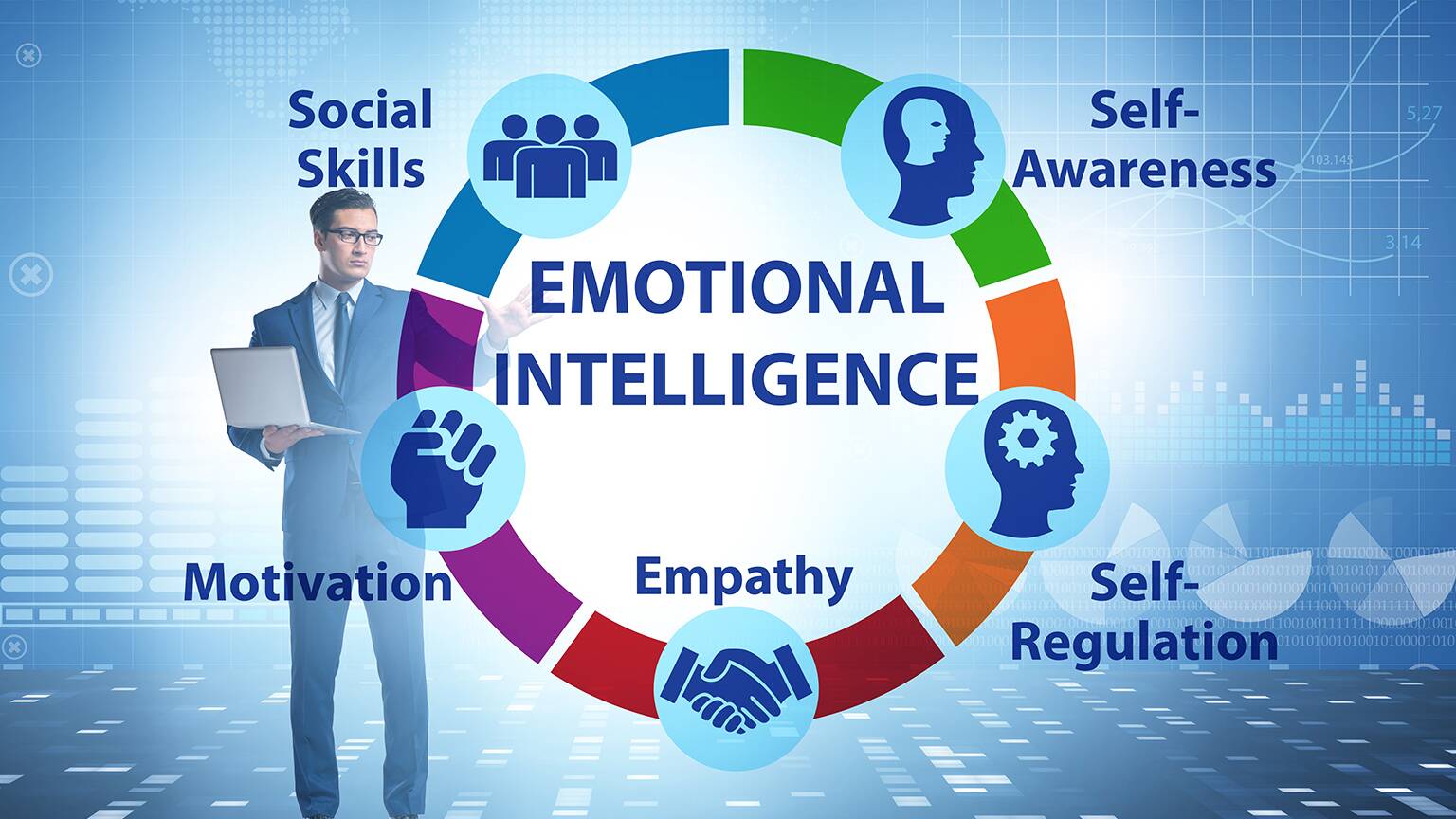
Elements of Emotional Intelligence:
Self-Awareness – When you are aware of your emotional triggers, strengths, and weaknesses, you can be confident of who you are without trying to be something you are not. Self-awareness enables you to adjust in any situation, which authentically projects confidence.
Why self-awareness matters: It is the key to develop trust when stakes are high. Confidence founded on true awareness creates a calm and trustworthy presence that others are attracted to.
Self-Regulation – A big test of EP is how you conduct yourself under pressure. When you regulate your emotions and stay cool during tough situations, you exude a strong presence. Self-regulation is about managing your emotions in a way where you are in control of yourself and the situation.
Why self-regulation matters: Self-regulated leaders manage stress better and create a stable environment for their people. Being calm under pressure exudes confidence and ensures your people remain focused.
Motivation- Leaders with higher presence have a clear sense of purpose that shows them how to lead. When you are motivated by deeper emotions like a long-term vision or values, you project clarity and confidence, which are two important elements of EP.
Why motivation matters: To create long-term impact, purpose-based leadership is important. When you are clear about your values and vision, you develop loyalty and trust with your team members.
Social Skills – Strong social skills are about developing relationships, handling conflicts, and navigating conversations. Leaders who effectively manage different personalities and influence without being overbearing inspire others.
Why social skills matter: These skills help develop long-lasting connections driving collaboration and trust.
Developing emotional intelligence and executive presence can be time-consuming, but it is worth the effort. An effective executive presence leadership program offers practical ways to help you start your journey. Check out our program offerings.
Share on Social Channels
Our Categories
Categories
- Behaviorial (7)
- Blog (284)
- Certified People Manager Program (5)
- Coaching (9)
- Corporate Trainers (7)
- Developing Collaboration (12)
- Emotional Intelligence Training (13)
- Executive Leadership Program (30)
- First Time Manager Training (14)
- Growth Mindset Course (3)
- Inspirational Leadership (23)
- Inspiring and Successful Leadership Awards (23)
- Leadership Awards (44)
- Leadership Development (128)
- Leading Virtual Teams (6)
- Management Development (29)
- Marketing (2)
- Negotiation Skills Training (8)
- Organizational Transformation (25)
- Others (24)
- Stakeholder Management (3)
- Strategic Leadership Development Program (4)
- VUCA Leadership (2)
- Wholesome Leadership (23)
- Women Leadership (17)
Recent Insights
“A coach is someone who can give correction without causing resentment”. Gen Z represents almost...
“Employees who believe management cares about them as people are more productive”. For a very...
“The number one problem first-time leaders face is failing to understand that leading requires entirely...
“Clearly, the thing that’s transforming is not the technology – the technology is transforming you”....
“Women often talk themselves out of opportunities when they should be doing the opposite”. Even...
