
- About us
- SolutionsCoaching Solutions
- Facilitators
- Resources
- Contact us
Irrespective of your organization’s size, creating and maintaining a thriving business in the modern world is challenging. Top management must adapt, innovate, and engage with people and leaders must unlearn before learning the new skills, behaviors, and tools needed to be successful in the new environment.
Agile leadership is a modern way of leading people and is an important trait for the next generation of business leaders. Agile leaders pivot quicker in response to uncertain, volatile, and complicated environments. The Covid-19 pandemic challenges intensified the need for agile leadership skills and agility is now an important quality for leaders in today’s world.
It is a growth mindset creating self-management skills and in an agile environment, team members collaborate, learn, and receive faster feedback from the users. Agile leaders neither micro-manage the people nor provide complete independence. They maintain a healthy balance between anarchy and a strict environment. The OODA loop, which is a four-step method filters information thereby providing context and enabling appropriate decisions.
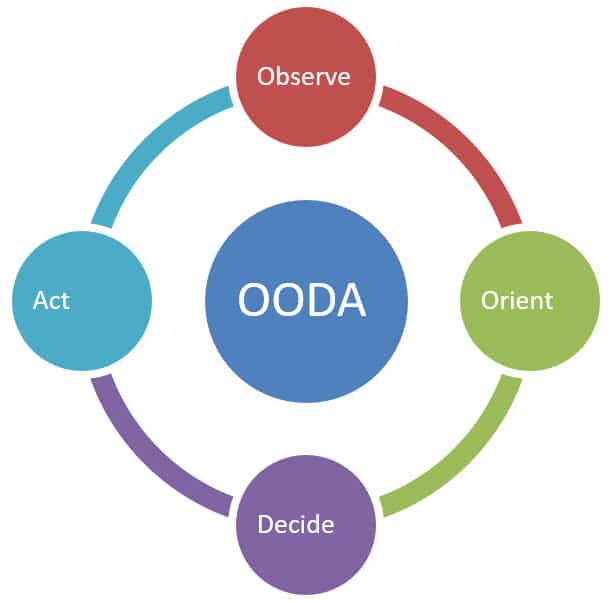
The principle is very effective in volatile, uncertain, chaotic, and ambiguous environments where situations are constantly changing. Being capable of quality decisions in such situations is critical for survival and success.
An agile transformation leader focuses on building high-performing teams by applying agility principles within the processes and structures. Such leaders allow their team members the freedom to make decisions while training them on how to respond to changing market conditions and taking advantage of technology development.
Agility is also customer-centric, which in today’s digital world is also important. Companies are increasingly using digital media to interact with their customers. Agile leaders ensure quick responses to customer feedback and focus on client satisfaction.
Companies are run by people and pre-programmed rules and structures do not work in today’s constantly changing environment. Here are five principles that are covered in most agile leadership training programs:
Being an agile leader means mastering different styles and adopting the most appropriate one that befits the situation. Generally, different leadership styles that can be applied in different cultures and contexts include catalyzing, coaching, conducting, demanding, directing, and envisioning.
Agile approach needs adaptability, flexibility, and out-of-the-box thinking and some attributes of such leaders include:
Agile leaders focus on empowering people to make appropriate decisions in fast-changing environments. Here is how agility transforms businesses:
Insufficient mentoring and training are damaging and most people in management roles receive little or no training on how to do their jobs. Most companies promote people who have excellent records in executing technical work into management roles. However, the management skills needed are very different and a solid agile leadership program in Singapore is important if you are starting your journey or want to deepen your agility skills. This course assists in discovering your natural disposition and how it impacts your team members. You will learn how to build a safe-to-fail environment to develop an adaptive, creative, and transparent culture.