
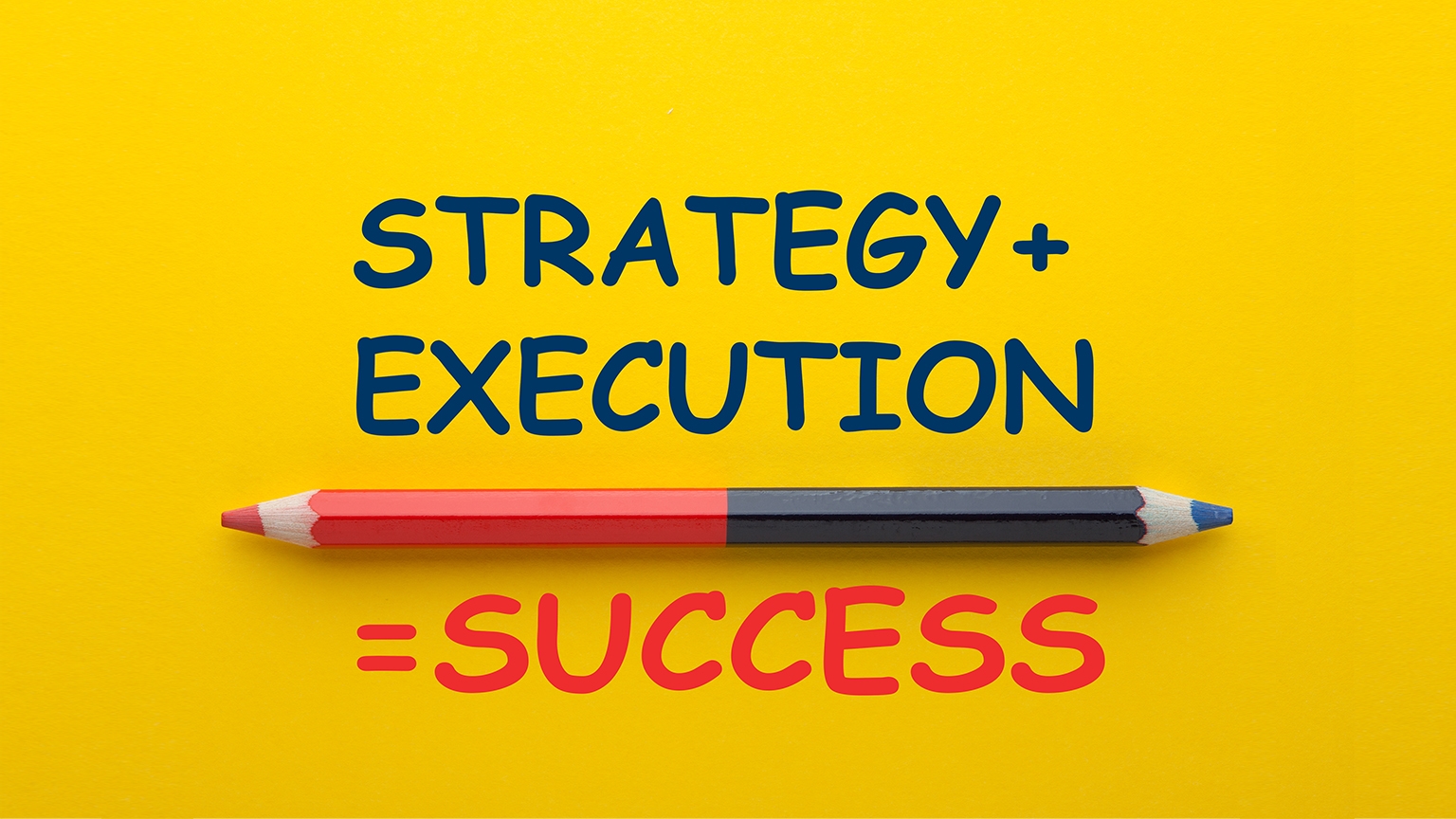
Every organisation has a vision statement. Fewer have a credible path to executing it. And even fewer have executive leadership that can carry that vision through the friction of real operations, competing priorities, and the kind of organisational inertia that quietly kills ambitious plans.
That gap between intent and outcome? It’s a matter of execution.
Schedule a call with a Pragati Leadership expert to discuss how we can support your strategic objectives.
Schedule your CallAccording to Harvard Business Review, 67% of well-formulated strategies fail specifically because of poor execution. These figures haven’t improved much over the years, which tells you something about how persistently organisations underestimate what it takes to move from strategy to results.
Why Vision Alone Doesn’t Deliver?
Vision is necessary. Nobody disputes that. But vision without execution is just aspiration wearing a business suit.
The AchieveIt 2025 State of Strategy Execution Report, surveying over 250 senior leaders, found that 91% cited a lack of strategic vision as a key reason plans fail, while 68% admitted their teams weren’t fully aligned with the organisation’s direction.
That’s a striking contradiction: leaders know alignment is broken but can’t seem to fix it.
The root cause is usually the same. Strategy is too broad for teams to act on. Priorities shift without clear communication. And leadership assumes everyone is on the same page without ever verifying. Strategic vision implementation requires more than a compelling narrative. It demands a mechanism that forces clarity, creates checkpoints, and holds people accountable at every level.
The Executive’s Role in Corporate Strategy Execution:
Execution doesn’t trickle down on its own. When executives treat it as someone else’s job, the strategy degrades with every organisational layer it passes through. By the time it reaches frontline teams, it barely resembles the original intent.
Here’s what the execution role of executive leadership actually involves:
- Translating strategy into operational direction – High-level goals like “grow market share by 15%” mean nothing without specifics. Which markets, through which channels, by when, with what resources? Executives must break broad objectives into department-level priorities with defined success metrics. If a team can’t see how their work connects to the bigger picture, the strategy has already lost traction.
- Building genuine organisational vision alignment – Not the kind you declare at an annual kickoff and forget about. The kind you reinforce in every quarterly review, every cross-functional meeting, every leadership communication. Alignment is a practice, not a one-time exercise. The AchieveIt report found 74% of respondents said a lack of cross-departmental visibility hampers execution.
- Establishing accountability that sticks – Here’s a data point: 85% of leadership teams spend less than one hour per month discussing strategy, and 50% spend no time at all (Harvard Business Review). If leadership isn’t spending time on strategy, they certainly can’t hold anyone else accountable for executing it. Accountability means clear ownership, measurable expectations, and consistent follow-through on outcomes rather than effort.
- Driving cross-functional coordination – Most strategies cut across departments. Product needs sales input. Marketing needs operations alignment. When departments operate in isolation, execution stalls. Executives must actively create shared objectives and integrated communication channels.
Building Operational Execution Strategies That Work:
Execution improves dramatically when organisations treat it as a system rather than a series of separate initiatives. That system rests on a few non-negotiables.
- Ruthless prioritisation, for one. A consulting firm reported that a client cut strategic priorities from over 100 to just 12, paired with a one-page strategy map. The result was more than double the execution rate. When everything is urgent, nothing gets the focus it needs.
- Then there’s a leadership communication strategy that actually works. Not more emails or town halls, but consistent, clear messaging that simplifies complex strategies into terms people can act on. When communication fractures, people fill the gap with assumptions, and alignment collapses.
- And finally, real-time performance tracking. McKinsey found that 45% of nearly 800 executives reported their planning processes failed to track execution of strategic initiatives. You can’t course-correct what you can’t see.
The People Factor: Employee Engagement Leadership
Execution gets treated as a process problem far too often. It’s equally a people problem. Only 5% of employees understand their company’s strategy (HBR).
That means 95% of the workforce is either guessing or disconnected from what the organisation is trying to achieve.
Employee engagement leadership isn’t a soft skill bolted onto strategy. It’s the mechanism through which strategy becomes real work. When people understand the direction, believe in it, and feel accountable for their part, execution accelerates.
Leadership coaching and mentoring across organisational layers amplifies this further, helping managers shift from task management to outcome-driven leadership.
Conclusion:
Vision sets the direction. Executive leadership determines whether anyone actually gets there.
The organisations that consistently deliver aren’t the ones with the most polished strategies. They’re the ones where leaders stay involved past the planning phase, build systems for execution, and hold the organisation accountable for results rather than intentions.
Ready to close the gap between strategy and results? Connect with Pragarti Leadership to explore how our leadership programmes can help your executive team turn vision into measurable impact. Contact us now.
FAQs:
What does “execution” mean in executive leadership?
Execution refers to translating strategic vision into actionable plans and ensuring those plans are implemented effectively across every level of the organisation.
Why is execution as important as vision?
Vision provides direction, but without disciplined execution, even well-formulated strategies remain unrealised, with research showing up to 90% of strategies fail at the execution stage.
What role do executives play in strategy execution?
Executives ensure alignment across functions, allocate resources strategically, define clear accountability, and actively monitor progress to drive measurable outcomes.
How do leaders ensure alignment between vision and execution?
Through consistent communication, clearly defined priorities, cross-functional coordination, and ensuring every team understands how their work connects to the broader strategy.
How can leaders turn vision into actionable plans?
By breaking down high-level strategy into specific goals with timelines, defined responsibilities, success metrics, and regular review cycles.
What is the importance of accountability in execution?
Accountability creates ownership and momentum; without it, priorities drift, responsibility becomes unclear, and execution gaps widen across the organisation.
How does effective execution impact business results?
Strong execution improves operational efficiency, accelerates goal achievement, reduces resource waste, and directly contributes to measurable, sustained business growth.
Share on Social Channels
Have Questions? Email us.
Our Categories
Categories
- Behaviorial (7)
- Blog (319)
- Certified People Manager Program (7)
- Coaching (10)
- Corporate Trainers (8)
- Developing Collaboration (13)
- Emotional Intelligence Training (15)
- Executive Leadership Program (39)
- First Time Manager Training (17)
- Growth Mindset Course (6)
- Inspirational Leadership (25)
- Inspiring and Successful Leadership Awards (23)
- Leadership Awards (44)
- Leadership Development (138)
- Leading Virtual Teams (7)
- Management Development (30)
- Marketing (2)
- Negotiation Skills Training (10)
- Organizational Transformation (27)
- Others (24)
- Stakeholder Management (3)
- Strategic Leadership Development Program (7)
- VUCA Leadership (2)
- Wholesome Leadership (23)
- Women Leadership (18)